
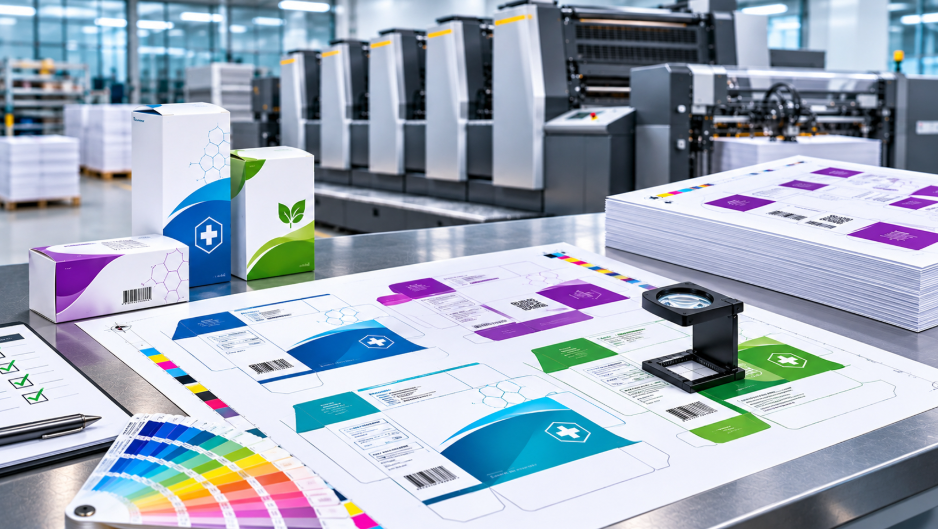
A medicine box is easy to overlook. Most people open it, take out the strip or bottle, and put the carton aside. Yet that small box has a few important jobs. It keeps the product and its leaflet together, carries details that pharmacists and customers may need to check, and helps distinguish one medicine from another. If the name, strength or expiry information is printed incorrectly, the problem is more than a design issue.
That is why medicine box printing needs attention at every stage, from preparing the artwork to checking the finished cartons. The aim is not simply to make a box look attractive. It is to make sure the packaging is readable, suitable for the product and consistent with the manufacturer’s identity.
A Familiar Look Across the Product Range
Visit a pharmacy, and you will see cartons of different sizes and colours lined up on shelves. Some medicines may even have similar names or come in different strengths. A clear design helps pharmacists find the right product and helps customers recognise a brand they have used before.
A medicine carton box can carry the company’s logo, colours and typeface without making the product information hard to find. For example, a manufacturer may keep the same logo placement across its range but use a clear colour difference for different strengths. The design should make those differences easy to notice. It should not rely on decoration alone.
Product Details Need Room to Breathe
There is a lot to fit on a pharmaceutical carton. Depending on the medicine and applicable rules, the pack may need to show its name, composition, strength, batch number, manufacturing and expiry dates, storage instructions, warnings and manufacturer details.
Trying to squeeze everything into a small space can leave the text crowded. A better approach is to plan the layout around the information people need to read first. Use legible type, enough contrast and sensible spacing. Barcodes and other machine-readable details also need to be reproduced clearly.
This is where pharma label printing and carton printing must be coordinated. Where the same information appears on both the primary pack and outer carton, the details should agree. The manufacturer should check the final artwork against the approved product information before it goes to print. In India, medicine labelling must meet the relevant requirements under the Drugs and Cosmetics Rules. A printer can reproduce the approved design, but responsibility for the accuracy and compliance of the information remains with the manufacturer.
The Carton Has a Supporting Role in Safety
The carton is generally the outer pack. The medicine itself is held in a blister, bottle, tube or another primary container. A suitable carton helps keep that pack and any leaflet together and can reduce scuffs or handling damage during storage and distribution.
That is one part of pharmaceutical packaging safety, not the whole picture. A carton cannot replace a sealed blister, tamper-evident feature or sterile barrier where one is required. Its role is to support the complete packaging system.
Printed details matter too. Imagine two cartons that look almost alike but contain different strengths of a medicine. If the strength is difficult to read, a pharmacist may need to spend extra time checking the product. A wrong batch number or expiry date can cause a more serious record-keeping problem. For this reason, printed samples should be checked for spelling, alignment, missing text, colour variation and legibility before a full run is approved.
Choose a Carton That Fits the Medicine
A box designed for a blister strip may not suit a bottle. The size, board and construction should be selected after considering the product’s shape, weight and primary packaging.
Pharma mono cartons are commonly used as outer packs for tablets, capsules and similar products. They can be made to different dimensions, with space for a leaflet where needed. The carton should hold the contents without leaving too much room for movement or making the pack difficult to insert and remove.
Board thickness, accurate creasing and secure pasting all affect how the finished carton performs. A surface finish, such as matte or gloss lamination, may be chosen for appearance or handling, but it should not make important text harder to read. Asking for a physical sample is a sensible step. It lets the manufacturer check the fit, closure and finish before approving a large quantity.
Keep Repeat Orders Consistent
A pharmaceutical company may order cartons for several products, then reorder them months later. If the artwork files, colour references or specifications are not kept properly, the next batch may look different from the previous one.
A simple record of approved artwork versions, board details and finishing instructions can prevent avoidable mix-ups. Pharmaceutical printing companies should be able to work from the correct files and flag any differences they notice before production. The manufacturer should also make sure that old artwork is not sent by mistake when product details have changed.
Consistency does not mean every carton must look identical. It means the brand elements stay familiar while the medicine-specific information remains accurate and easy to distinguish.
Questions to Ask Your Printing Partner
Choosing a printing and packaging company involves more than comparing the price per carton. Ask what board options are available, how proofs are approved and what checks are carried out during production. Find out whether you can review a printed sample and how the supplier handles defects or changes to the artwork.
It also helps to share the requirements clearly at the start: carton dimensions, quantity, approved artwork, finish and delivery date. Clear instructions reduce the chance of misunderstandings and make it easier to assess the finished order against the brief.
Frequently Asked Questions
Q1.What is Medicine Box Printing?
Medicine box printing is the process of producing printed cartons for medicines. It covers artwork preparation, printing, cutting, creasing, folding and finishing.
Q2.Why does a medicine carton box matter?
A medicine carton box holds the primary pack and any leaflet together, provides an outer layer of protection and displays information used to identify the medicine.
Q3.What are pharma mono cartons used for?
Pharma mono cartons are paperboard outer boxes commonly used for tablets, capsules and other pharmaceutical products. Their size and design depend on the pack they need to hold.
Q4.How does pharma label printing help?
Pharma label printing makes product names, strengths, batch details, expiry dates and warnings easier to identify. The information must still be checked and approved by the medicine manufacturer.
Q5.What should I look for in pharmaceutical printing companies?
When comparing pharmaceutical printing companies, ask about relevant experience, material choices, print quality, proof approval, production checks and delivery timelines.
Conclusion
A medicine carton is a small part of a much larger packaging process, but its details matter. It should fit the primary pack, carry readable information and give the product a recognisable appearance. Careful artwork checks and consistent production help avoid mistakes that may be costly to correct later.
Blossom Print & Pack provides customised printing and packaging solutions, including pharmaceutical cartons. Manufacturers planning a packaging order can discuss their product dimensions, artwork and production requirements with the company before moving ahead.